What We Do

Services

The full list of concrete work we take on, from a new driveway to fixing one that's already cracked.

HomeServices

Everything we take on

Every job below is one we do ourselves across Harrisburg.

Concrete Driveways

We excavate to grade, lay four to six inches of compacted stone base, and pour a driveway thick enough to carry a loaded truck without flexing. Rebar goes in on anything wider than a single-car width, wire mesh alone isn't enough once the slab carries real weight.

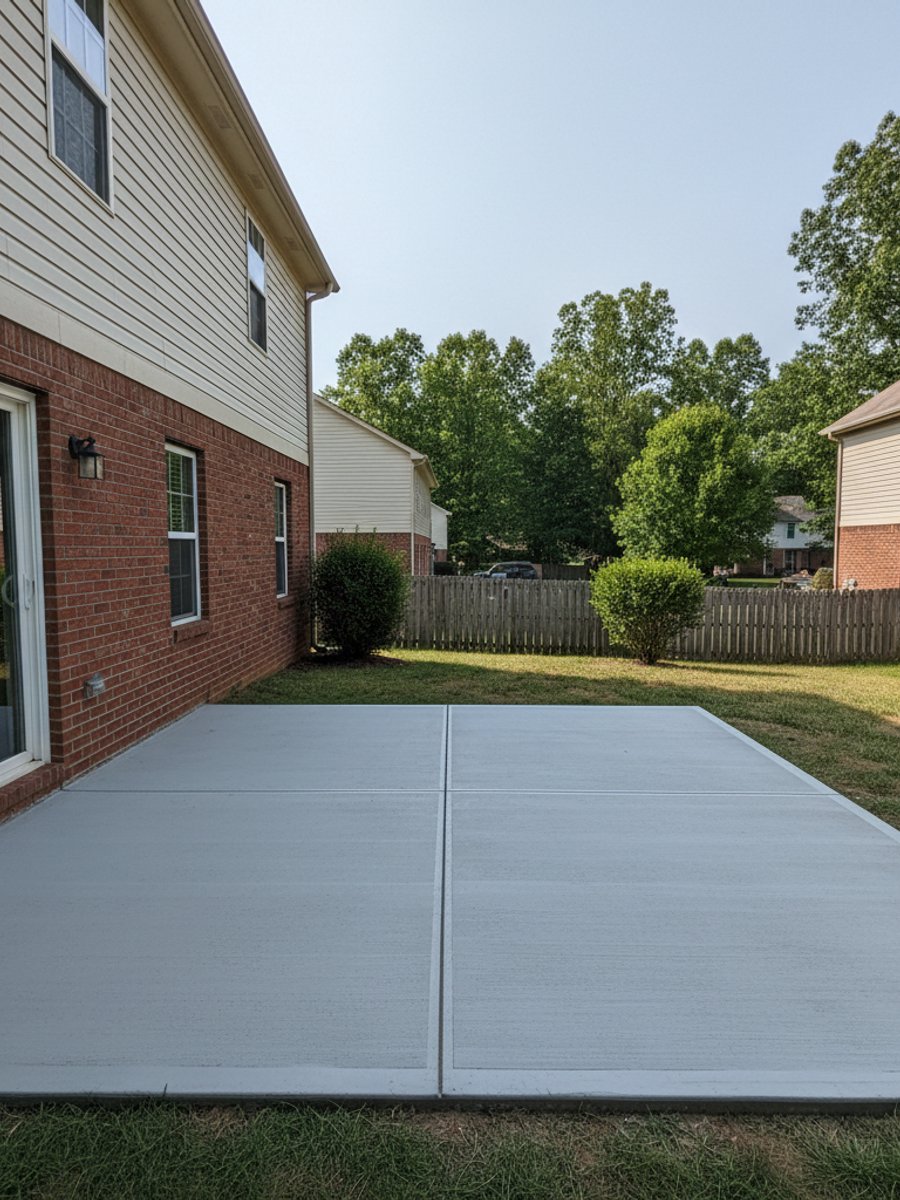
Concrete Patios

Patios get a broom finish or a stamped pattern depending on what you want to walk on barefoot in July. We slope every pour a quarter inch per foot away from the house so water doesn't pool against your foundation.

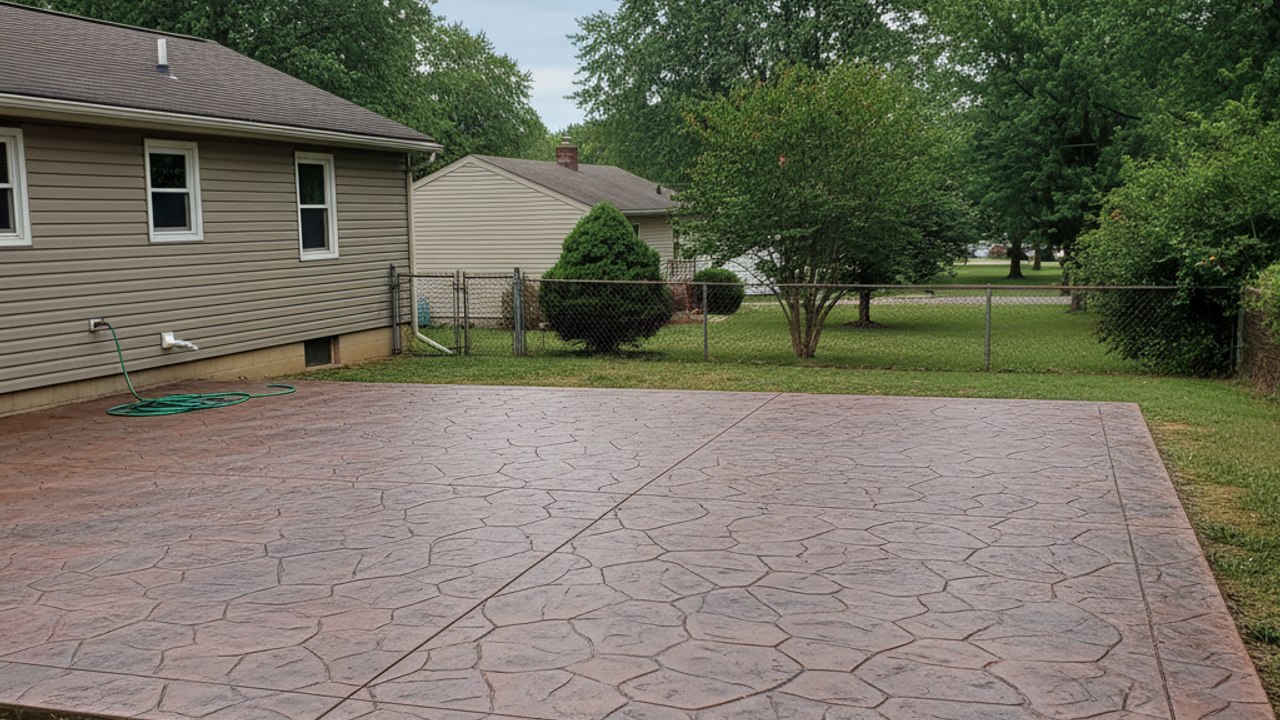
Stamped Concrete

We stamp a pattern into the slab while it's still plastic, ashlar slate, running bond brick, cobblestone, whatever matches your house. Color goes down as an integral pigment or a release agent, and we seal it after cure so the color doesn't wash out in the first hard rain.

Concrete Sidewalks & Walkways

Walkways get control joints every four to six feet, tighter spacing than a driveway needs, because a narrow slab cracks easier without them. We match the pitch to whatever's already draining on your property instead of creating a new low spot.

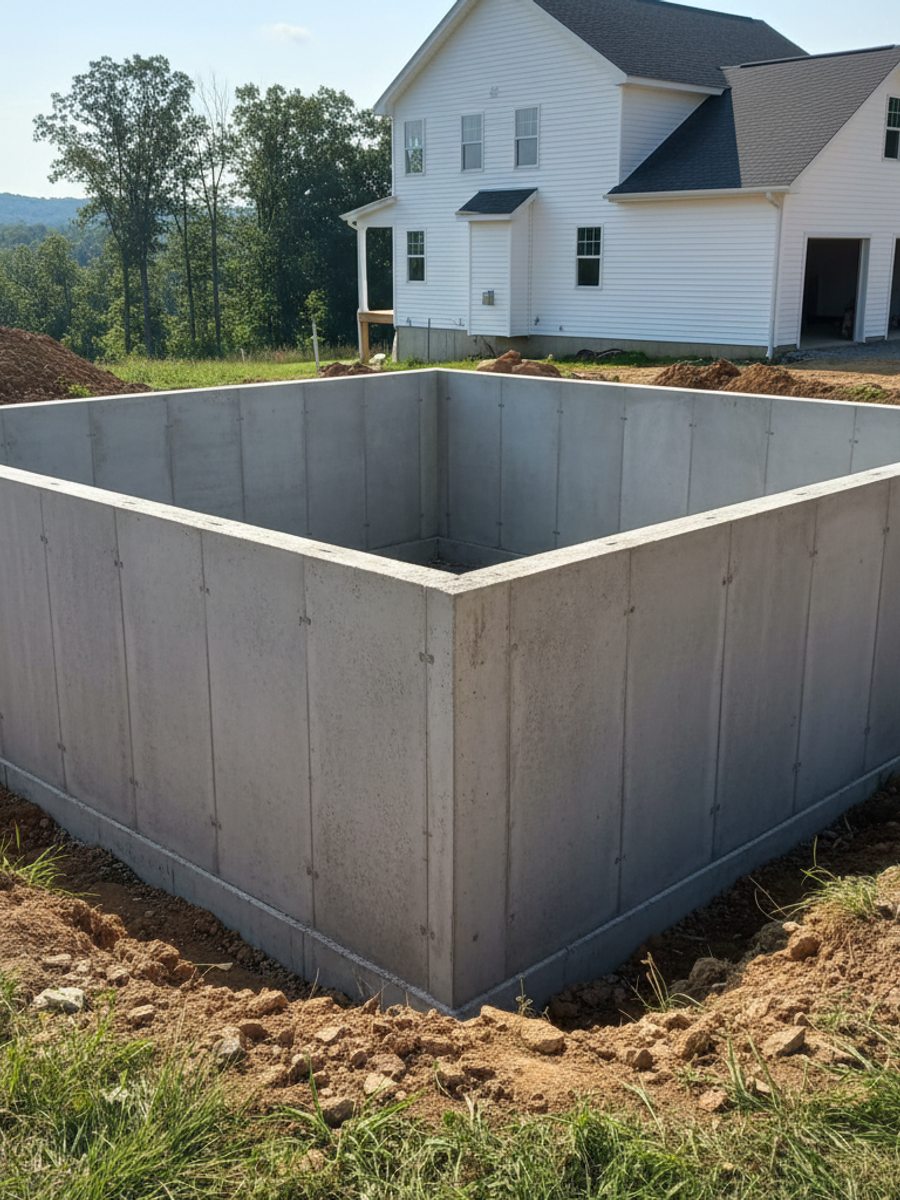
Concrete Slab Foundations

We pour slab foundations for sheds, additions and garages, starting with a vapor barrier and compacted fill so moisture doesn't wick up through the concrete for the life of the building. Anchor bolts and rebar get set before the pour, not drilled in after, because that's what actually holds a sill plate down in wind.

Concrete Repair

Cracked, sunken or spalling concrete usually means the base underneath failed, not the slab itself. We can mudjack or foam-lift a sunken section back to grade, or cut out and replace a panel if the crack's gone all the way through.

Concrete Steps & Porches

Steps see more freeze-thaw damage than almost any other part of a house because water sits on the tread and refreezes all winter. We build the forms to code rise-and-run and use air-entrained concrete so the surface holds up to salt and ice.

Garage Floor Concrete

Garage floors take oil, road salt and the weight of a car parked in one spot for years, so we use a higher-strength mix than a standard patio. We can add a broom finish for grip or a sealed finish if you're putting down epoxy later.

Concrete Retaining Walls

A concrete retaining wall holds back a slope that's been sliding into your yard or eating into a driveway edge. We size the footing and drainage behind the wall to the height and soil, not a one-size number, because an under-built wall just moves the problem downhill.

Concrete Removal & Demolition

Old, cracked concrete has to come out before anything new goes in right, and we saw-cut and haul it off so you're not staring at a broken slab for a month. We also break out and dispose of old steps, patios or driveways on their own if you just want the space cleared.

How It Works

Four steps, and no surprises in any of them.

01

We come and look

You tell us what you want doing, we look at what is actually there, and we ask the awkward questions early.

02

You get a price

In writing, itemised, free. If something might add cost later we flag it now rather than at the end.

03

We do the work

Same crew throughout. We cover your floors, keep the dust down and tidy up before we leave each day.

04

We walk it with you

You point out anything you are not happy with and we fix it before the invoice, not after.

Where We Work

All of this, across Harrisburg, PA

Concrete crews travel throughout the Harrisburg area for these jobs.

Harrisburg, PA
Lancaster, PA
York, PA
Lebanon, PA
Carlisle, PA
Hershey, PA
Elizabethtown, PA
Mechanicsburg, PA
Middletown, PA
Camp Hill, PA
New Cumberland, PA
Common Questions

Things worth asking

Questions that come up once a concrete project is underway.

Do I need a permit for a new driveway or patio?
Most municipalities around Harrisburg require a permit for a new driveway apron where it meets the street, and some townships require one for a patio over a certain square footage. Permit requirements and fees vary by township, and pulling the correct permit before pouring is part of a properly run concrete project.
How long does a typical concrete pour take?
A standard driveway or patio takes one to two days to form, pour and finish, followed by about a week before it can handle vehicle traffic. Larger jobs, or ones needing extensive base repair or grading first, can run several days longer.
Can concrete work be done on a budget?
A plain broom finish in a standard gray mix is the most affordable option and holds up just as well structurally as a stamped or colored slab. Cutting square footage, phasing a project, or choosing a simpler finish are all ways to bring a concrete estimate down without cutting corners on the base or the mix strength.
Is there a guarantee on concrete work?
Workmanship is typically covered under warranty against issues like improper joint spacing or a base that wasn't compacted correctly. Normal concrete behavior like fine surface hairline cracking or slight color variation from batch to batch isn't a defect and isn't covered, since that happens with any concrete mix.
Who will I be dealing with day to day during a concrete project?
A single crew typically handles a concrete job from the initial site visit through the final finish, so the same person answering scheduling questions is on-site running the pour. There's usually no separate sales rep and installation crew who've never met.
What kind of concrete mix and materials are used?
A standard 3,000 to 4,000 PSI air-entrained mix is used for most driveways and patios, since air entrainment helps the slab survive freeze-thaw cycles typical in the Harrisburg area. Rebar is used instead of wire mesh on anything carrying vehicle weight, and mix strength goes up for garage floors or heavier-duty slabs.
Can I still live in my house during a driveway or patio project?
Living in the house during a concrete pour usually isn't a problem, though the driveway or work area itself will be blocked off for the pour and the curing period after. Access to a garage may be limited for about a week while a new driveway cures enough to drive on.
What should be done to prepare the site before a concrete crew arrives?
Clearing personal items, vehicles and any planters or furniture from the work area ahead of time speeds up the job considerably. Sprinkler lines, invisible fence wires or anything buried near the dig area should be pointed out during the estimate so they aren't cut during excavation.
What happens if something unexpected turns up once digging starts?
Buried debris, old broken concrete, tree roots or unexpectedly soft or wet soil sometimes show up once excavation starts, especially on older properties. When that happens, the issue and any cost or timeline impact should be explained before work continues, rather than showing up as a surprise on the final invoice.
How should new concrete be cared for after it's finished?
New concrete should be kept free of vehicle traffic for about a week and foot traffic for at least 24 to 48 hours while it cures. Sealing every few years, keeping deicing salt off the surface the first winter, and rinsing off dirt or leaf stains helps a driveway or patio keep its finish for decades.

Not sure what you need?

Describe the problem and we will tell you what it probably is. No obligation.

Call (717) 716-6542